
Hyppää sisältöön

Corporate social responsibility at Diak

Nainen hymyilee ulkona ja katsoo sivulle. Yllään musta takki ja beige neule: Hänen kätensä ovat polkupyörän ohjaustangolla ja taustalla on vihreitä puita.
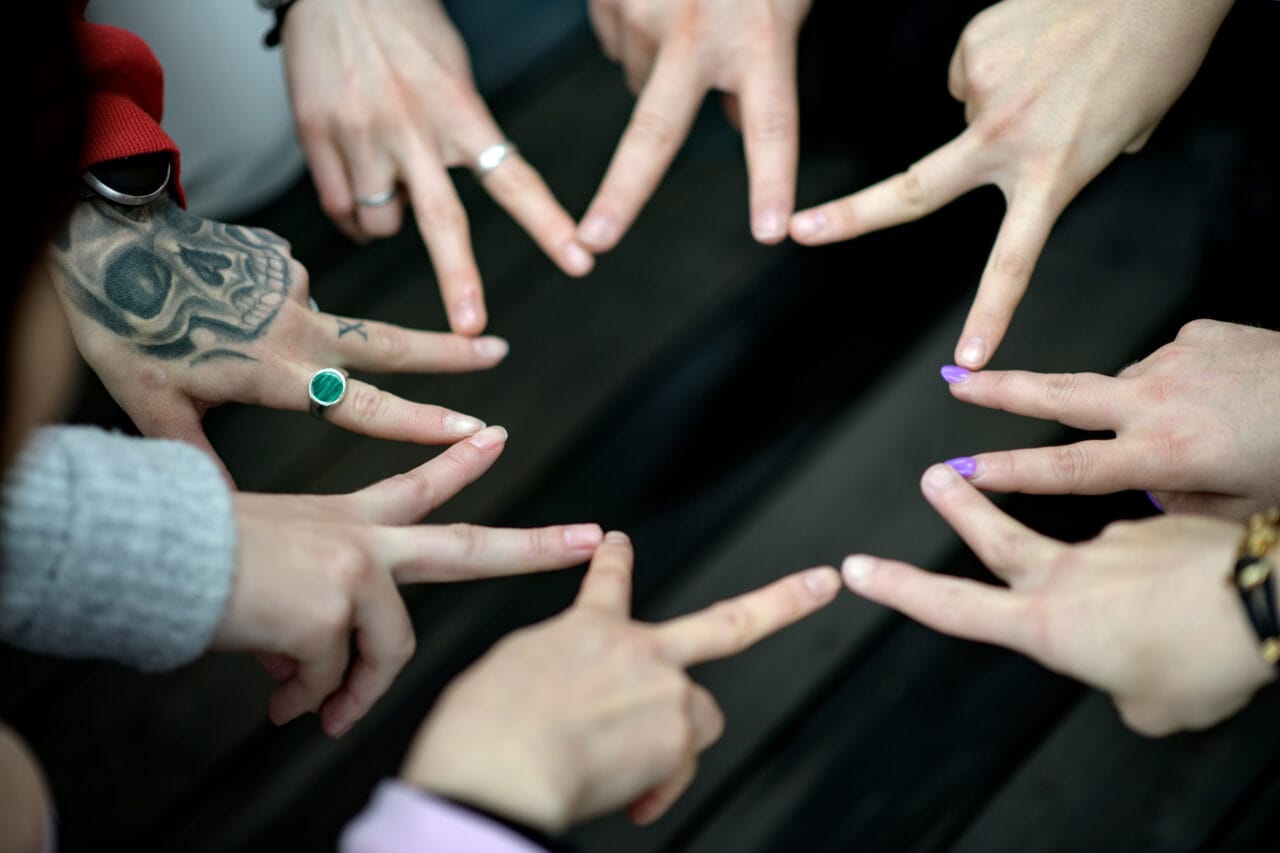
Ylhäältä kuvattu kuva kahden henkilön käsistä, jotka pitävät toisiaan kädestä. Toisella on tatuoidut käsivarret ja rannekoruja. Taustalla kivetys.

A pioneer in social sustainability

We are dedicated to building a world that is sustainable for both society and the planet. At Diak, social, ecological, and economic sustainability go hand in hand. Within our community, we foster well-being, resource wisdom, and a culture that celebrates diversity, with equality and inclusion at the very heart of our values. Responsibility is fully integrated into Diak’s quality management system.

Diak is committed to the shared sustainability and responsibility programme for universities of applied sciences in Finland, which is built upon the UN Sustainable Development Goals. To meet evolving sustainability demands and reflect our growing expertise, the programme was updated in spring 2026.
Key figures

The figures are from 2026.

3261
students completing placements all over Finland
61
projects
71 %
of students believe their studies promote sustainable development
56 %
recycling rate
923 tCO₂
total emissions
38 %
reduction in flight emissions since 2024

Our Sustainable Development Goals

The UN Sustainable Development Goals (SDGs) form the Agenda 2030 action plan, which was adopted by all UN member states in 2015. The goals aim to end extreme poverty, protect the planet, and ensure well-being for all by 2030.

In its operations, Diak has identified seven UN Sustainable Development Goals in particular that are closely linked to our strategic choices and core competencies.

Goal 3. Good Health and Well-Being
  • Impact of the program: Graduates in the social and health care fields promote well-being among people of all ages and those at risk of social exclusion.
  • Student well-being: monitoring starting in the fall of 2024 using the ZekkiPro tool (3x10D metric).
  • Support for Students: Well-being Groups and Accessible Support Services.
  • Employee well-being: preventive occupational health care, the “Mielen huoli” helpline, employee surveys, monitoring of sick leave, safety plans, and accessible facilities.
Goal 4: Quality Education
  • Employment: 73% of students are employed after graduation (2024)
  • Program Completion Rate: 80% of students will complete their degree by the deadline (2026)
  • Student Feedback: NPS 26 → Finland’s third-best result (2026)
  • Accessibility: Physical, Digital, and Linguistic Accessibility Plan. (2024)
  • Equality and Diversity: Workshops, Surveys, Special Education Teacher, Learning Support Model (2024)
  • Internationalization: Support for English-speaking students (2024)
Goal 8: Decent Work and Economic Growth
  • Center of Excellence for Social Enterprises (YYO)
  • Internships and Partnerships:
    • 3,261 students completed internships in various parts of Finland in a number of well-being sectors (2026)
    • Internships support professional development and strengthen services in the well-being sector.
  • Employment status: 67% permanent, 32% fixed-term (2026)
  • Workforce: Turnover rate 8.5% (2026)
  • eNPS (Employee Net Promoter Score): 6 (2026)
Goal 10: Reduced Inequalities
  • Diak’s strategic impact goal for 2025–2028: halting the rise in inequality.
  • In 2025, Diak launched its RDI impact chain and set of indicators, which links practical measures and results to societal impacts. The 31 reported projects reached 30,148 people. In addition, 10 societal solutions were developed, such as a life situation indicator aimed at people with specific work abilities. 
  • The “Social Disadvantage in Finland” map site, developed in Diak, allows users to explore the social consequences of disadvantage as well as the economic impacts of reducing it. Read more.
Goal 12: Responsible Consumption and Production
  • Food: Food waste on the Helsinki campus in 2026 decreased by 21% (compared to 2024).
  • Recycling: recycling rate in 2026 is 56%, a 5% decrease compared to 2024
  • Procurement: sustainability considerations taken into account (Hansel recommendations, local sourcing). Intangible options for employee gifts.
Goal 13: Climate Action
  • Carbon footprint: calculated in accordance with the GHG (Greenhouse Gas) Protocol (Scopes 1–3)
  • Total emissions: 922 tCO₂
  • Procurement 66%
  • Real Estate 26%
  • Travel 8%
  • Aviation emissions have fallen by 28% since 2024
Goal 16: Peace, Justice and Strong Institutions
  • Diak’s Vision 2028: A Pioneer in Social Sustainability – “So that everyone can live a meaningful and happy life.”
  • Diak’s values: boldly constructive, fairly engaging, and a champion of a better world.
  • Ethical principles guide international partnership cooperation.
Nuoret nojaavat kaiteeseen ulkona ja katsovat kaukaisuuteen. Kamera tarkentuu nuoreen joka katsoo eteenpäin hymyillen. Nuoria ihmisiä katsomassa ylöspäin

Climate University’s sustainability courses

Diak is part of the Climate University network, which trains experts in sustainability and responsibility. Its multidisciplinary, multilingual courses and learning materials are free of charge and open to everyone.

Contacts

Niko Nummela

Specialist
Niko Nummela.

Marja-Liisa Saarilammi

Head of Quality
Marja-Liisa Saarilammi.

You might also be interested in